By Harvey Kubernik
Johnny Cash is one of the most important, influential, and respected artists in the history of recorded music. And now a collection of his personal archives will find its permanent home at Belmont University, representing a historic partnership among the Cash family, the John R. Cash Revocable Trust and Belmont. The collection comes from Johnny’s children –– Rosanne Cash, Kathy Cash Tittle, Cindy Cash, Tara Cash Schwoebel and John Carter Cash –– and will anchor a new Johnny Cash Learning Center at the Mike Curb College of Entertainment & Music Business’s forthcoming Music Row building.
The archives collection includes some of Cash’s personal correspondence with fellow artists, family and other public figures, as well as personal notes, photographs, scrapbooks, handwritten lyrics, cassette tapes and more. Belmont also began a digitization process to catalog and preserve the collection prior to the opening of the Cash Learning Center. That digitization effort will be spearheaded by Dr. Mary Ellen Pethel, who will serve as director of the Johnny Cash Learning Center, in partnership with Belmont University Special Collections.
The Johnny Cash Learning Center will also include space for archival research, digital and physical exhibits, and educational programming integrated into Belmont’s curriculum. The space will also include a secure reading room to allow appointment-based access for researchers, while an open digital collection allows the archival materials to be available to the public
“We are thrilled that our father’s archive has found a home at Belmont University. An enormous body of his work, including unpublished writings, will now be available for scholars and students to more intimately connect with the foundational elements of his artistry for years to come,” the Cash family said in a statement.
“Johnny Cash was one of the greatest storytellers in American music,” added Belmont University President Greg Jones. “At Belmont, his archives will bring those stories to life for students across every discipline. We are humbled that the Cash family chose us as the permanent home for this legacy, and deeply grateful to everyone who made it possible.”
“There is no parallel for what this means for our students and scholars,” said Brittany Schaffer, Dean, Mike Curb College of Entertainment & Music Business. “Direct access to the personal papers and lyrics of one of the most important artists in American history is something most institutions can only dream of. The Johnny Cash Learning Center will be a place where his story is not just preserved but experienced.”
Johnny Cash composed more than 600 songs and sold more than ninety million records. He’s been awarded twenty-nine gold, platinum, and multiplatinum records for his albums and singles and has been inducted into the Grammy Hall of Fame, the Rock & Roll Hall of Fame, the Country Music Hall of Fame, and the Hollywood Walk of Fame.
On February 20, 2026. Intervention Records continued its Sun Records Hi-Fi Series—featuring classic titles from the Memphis label, mastered to vinyl from original tapes — with a new pressing of Johnny Cash with His Hot and Blue Guitar! the first long-playing record from this enduring country icon. The album, featuring “I Walk the Line,” “Cry, Cry, Cry,” and “Folsom Prison Blues,” has been given the ultimate treatment for this 180-gram, 45 RPM mono release.
On August 16, 1975, Cash was in Southern California to promote his autobiography, Man in Black (1975), and performed a special concert for the Christian Booksellers convention.
I then conducted an interview with Johnny at the Royal Inn Hotel in Anaheim. It was published in the now-defunct UK music weekly Melody Maker.
“It covers the ups and downs of my life and music career and my problem with drugs,” Cash explained candidly.
“In the 1950s, people in Nashville thought I was a bit unorthodox. I came from Memphis, where Elvis, Jerry Lee Lewis, and Carl Perkins were doing some strange things on Sun Records.
“It was time to do the book and set the record straight. About a year ago, I was approached by the publisher to write it. I spent nine months writing it and shaping it. I wrote it by hand and worked with an editor.
“It was a whole new project for me. More discipline was involved. It was my main activity for months when I got up in the morning. It was hard lookin’ back through my life and trying to remember conversations and details. Remembering some of the nightmares that I had, especially gettin’ off drugs. I went through a total soul-searching experience lookin’ back. I went through all the pain again to a certain degree.”
Cash’s autobiography also contains twenty song lyrics which provide a musical guideline.
“The lyrics help tell the story. In concert, I sing ‘Sunday Morning Coming Down,’ the Kris Kristofferson tune. That’s so much of me that sometimes I feel like I wrote it. There are some songs that I must write for self-expression. If a song comes along, I must acknowledge it. I’ve recently recorded a song, ‘Strawberry Shortcake.’ It’s about a guy who went into the Plaza Hotel in New York and stole a cake. It’s a novelty song. But there are some songs that I had to write, like ‘I Walk the Line.’ In 1963, I used trumpets on ‘Ring of Fire,’ which was quite a departure for a country song at that time.
“I like to go into the studio with my own musicians and record my own songs,” Cash underscored. “I’m open to other songwriters. I like to do things differently in my career.”
In our 1975 Melody Maker dialogue, Cash discussed his friendship with Bob Dylan.
“I became aware of Bob Dylan when the Freewheelin’ album came out in 1963. I thought he was one of the best country singers I had ever heard. I always felt a lot in common with him. I knew a lot about him before we had ever met. I knew he had heard and listened to country music. I heard a lot of inflections from country artists I was familiar with. I was in Las Vegas in ’63 and ’64 and wrote him a letter telling him how much I liked his work. I got a letter back, and we developed a correspondence.
“We finally met at Newport in 1964. It was like we were two old friends. There was none of this standing back, trying to figure each other out. He’s unique and original.
“I keep lookin’ around as we pass the middle of the 1970s, and I don’t see anybody come close to Bob Dylan. I respect him. Dylan is a few years younger than I am, but we share a bond that hasn’t diminished. I get inspiration from him.
“We’ve gone fishin’ on my boat dock for hours and haven’t said a word.”
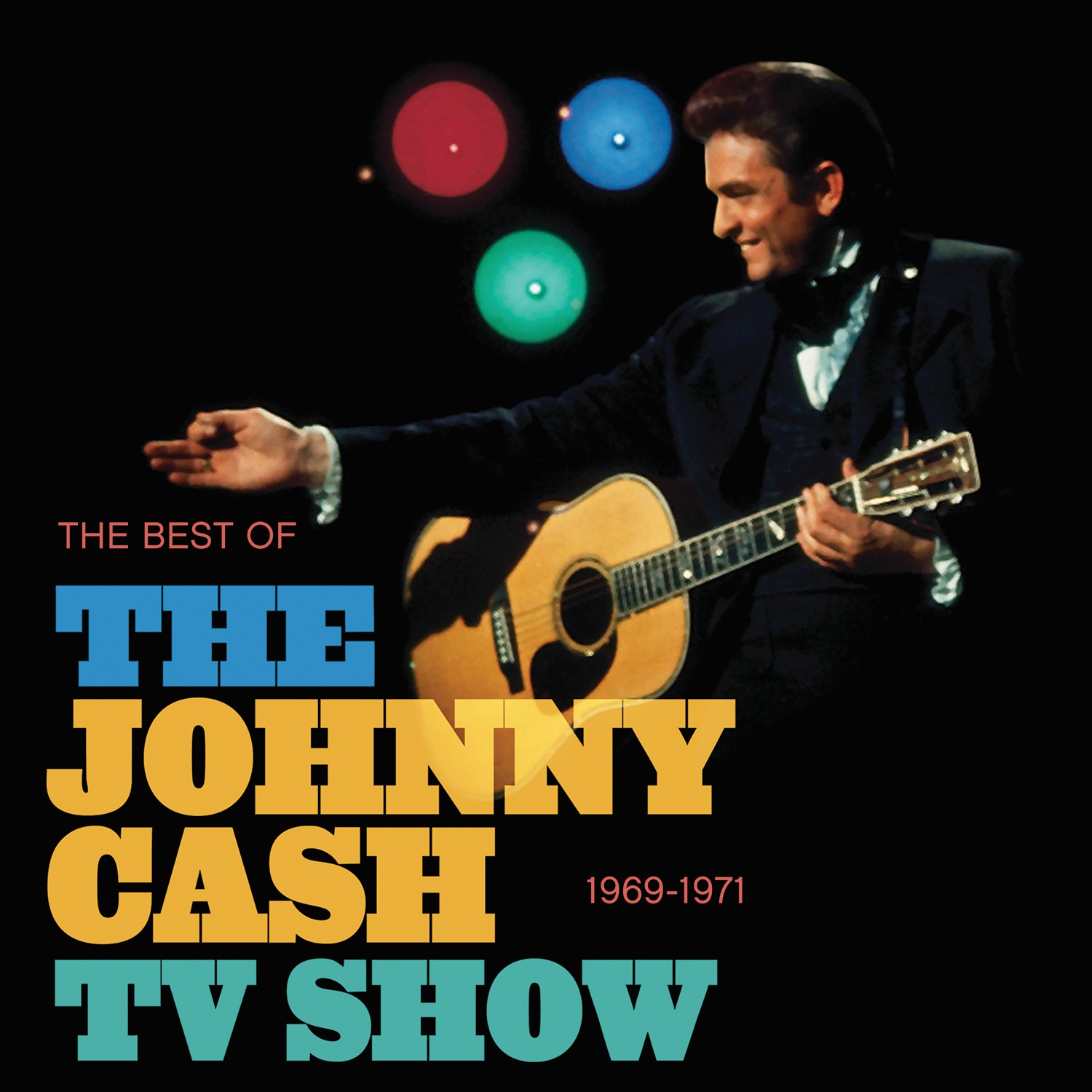
The Johnny Cash Show aired on ABC from 1969 to 1971. Cash invited a wide-ranging lineup of musical performers to join him, among them Louis Armstrong, Bill Monroe, Dusty Springfield, Judy Collins, the Monkees, Creedence Clearwater Revival, Stevie Wonder, Tony Joe White, Homer & Jethro, the Everly Brothers, Joni Mitchell, Neil Young, Derek and the Dominos, Roger Miller, Faron Young, Charley Pride, Loretta Lynn, Marty Robbins, Mickey Newbury, Neil Diamond, Conway Twitty, Bob Dylan. Tammy Wynette, Waylon Jennings, George Jones, and Doug Kershaw.
“One reason country music has expanded the way it has is that we haven’t let ourselves become locked into any category,” Cash told me in 1975. “We do what we feel.”
In his June 12, 1969, review for The Great Speckled Bird, the counterculture underground newspaper in Atlanta, Georgia, Gene Guerrero saluted The Johnny Cash Show premiere.
“TV CASHES IN: OCCASIONALLY, television gives the viewer a glimpse of its potential as a creative medium. Usually, as with The Smothers Brothers Show, it is a fleeting glimpse before the owners of the public airways get uptight or commercialism subverts the creativity. With the inauguration of The Johnny Cash Show, country music has finally made it to network television. One can only hope and pray that it will take a couple of seasons before these corrupting influences set in.
“Dylan sang a couple of songs off his new album, including ‘Girl From the North Country,’ which he sings with Cash. In a non-contrived way, Dylan and Cash singing together remind you of two kids practicing for their first recital. In this time of super-slick entertainers, that’s very refreshing.”
Cash was directly involved in suggesting guests to book and songs for broadcast. He gave a forum to former HUAC blacklist victim Pete Seeger who sang the anti-war song “Big Muddy,” and Canadian singer/songwriter and social activist Buffy Sainte-Marie, who performed Peter La Farge’s “Custer” on the program. Cash also refused to edit the word “stoned” from Kris Kristofferson’s “Sunday Morning Coming Down.”
However, Cash eventually realized the obligations of his TV series hampered his creativity.
“It cut down on my touring, it became too confining,” he admitted in our 1975 Melody Maker chat.
“We stayed in Nashville for two-thirds of the time. I really didn’t enjoy it all that much. If it was kept loose and spontaneous, it could have been great. But we had to do the same song eight or ten times before they would accept it. The show lost its feel and honesty. Consequently, I lost a lot of interest in it.”
In September 2006, CMV/Columbia Legacy, a division of Sony BMG Music Entertainment, released the two-disc DVD set, The Best of the Johnny Cash Show, hosted by Kris Kristofferson.
(Harvey Kubernik is the author of 21 books, including 2009’s Canyon Of Dreams: The Magic And The Music Of Laurel Canyon, 2014’s Turn Up The Radio! Rock, Pop and Roll In Los Angeles 1956-1972, 2015’s Every Body Knows: Leonard Cohen, 2016’s Heart of Gold Neil Young and 2017’s 1967: A Complete Rock Music History of the Summer of Love.
Sterling/Barnes and Noble in 2018 published Harvey and Kenneth Kubernik’s The Story Of The Band: From Big Pink To The Last Waltz. In 2021, they wrote Jimi Hendrix: Voodoo Child for Sterling/Barnes and Noble.
Otherworld Cottage Industries in 2020 published Harvey’s Docs That Rock, Music That Matters. His Screen Gems: (Pop Music Documentaries and Rock ‘n’ Roll TV Scenes) was published in February, 2026 by BearManor Media. Kubernik is currently working as Creative Director on a book on the Beatles for a UK publisher scheduled for 2027 publication date.
Harvey spoke at the special hearings in 2006 initiated by the Library of Congress held in Hollywood, California, discussing archiving practices and audiotape preservation.
In 2017, he appeared at the Rock & Roll Hall of Fame in Cleveland, Ohio, in its heralded Distinguished Speakers Series, and as a panelist, where he discussed the forty-fifth anniversary of The Last Waltz at the Grammy Museum in Los Angeles in 2023).