By Harvey Kubernik © 2025
Between 1962 and 1967, Otis Redding was a creative dynamo, recording frequently at Stax Records in Memphis, Tennessee with Booker T. & The MG’s – keyboardist Booker T. Jones, guitarist Steve Cropper, bassist Donald “Duck” Dunn, and drummer Al Jackson, Jr. During his lifetime, Redding released six studio albums and a succession of R&B and Top 40 hits (“These Arms of Mine,” “Respect,” “Try A Little Tenderness”) that helped transform Stax from a small Memphis record label into a global musical institution.
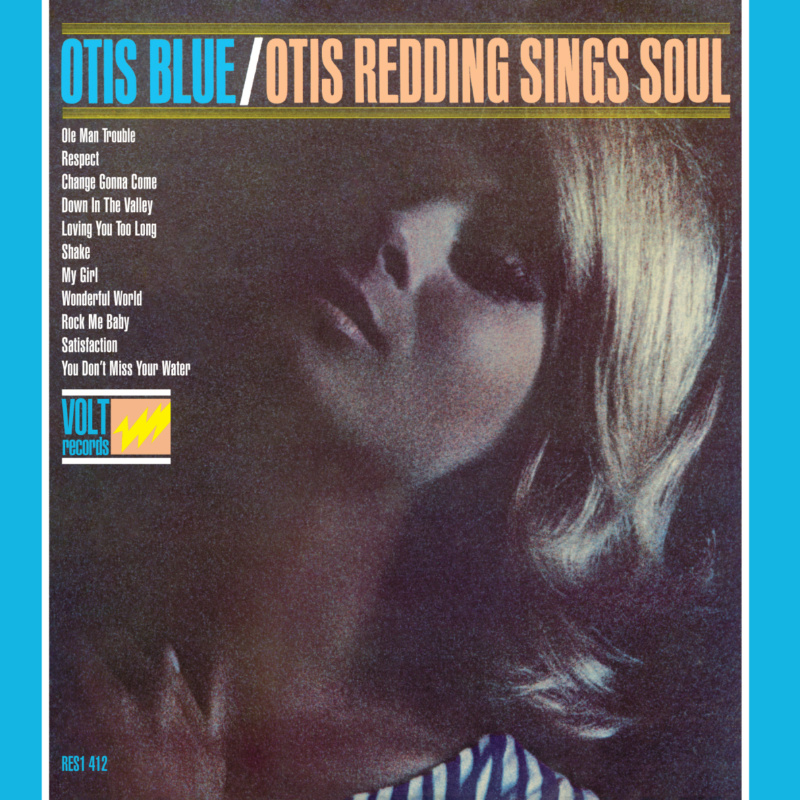
I received a copy of Redding’s raw soul classic Otis Blue/Otis Redding Sings Soul due on June 27, 2025 as a 180-gram black vinyl from Fidelity Record Pressing in Oxnard, CA. It’s part of a new premium Rhino Records Reserve collection. Audio expert Chris Bellman from Bernie Grundman Mastering handled the vinyl cutting. Each record comes packed in sturdy cardboard sleeves featuring custom Rhino Reserve artwork. The Oxnard pressing plant combines traditional methods with modern technology. Their team monitors each production step to ensure flawless sound quality.
Otis Blue/Otis Redding Sings Soul, originally shipped to retailers in September 1965 on Stax Records’ Volt label. “I’ve Been Loving You Too Long,” Redding’s powerful rendition of the Rolling Stones’ “(I Can’t Get No) Satisfaction” and the original version of “Respect” are on the disc.
The LP housed a slew of cover versions of contemporary R&B hits. Three tunes were penned by music legend and singer/songwriter Sam Cooke: “Wonderful World,” “Shake,” and “A Change Is Gonna Come.” Redding wrote three songs, one, co-written with Jerry Butler of the Impressions, “I’ve Been Loving You Too Long.”
Other elections are “My Girl,” by Smokey Robinson and Ronald White, which the Temptations first recorded, B.B. King’s “Rock Me Baby,” the Rolling Stones “Satisfaction,” courtesy of the Mick Jagger and Keith Richards team, plus William Bell’s “You Don’t Miss Your Water.”
The entire Otis Blue/Otis Redding Sings Soul, with the exception of “I’ve Been Loving You Too Long,” was done over a 24- hour period from July 9 to 10, 1965, at the Stax studio. The musicians collaborating with Redding are the Stax house band Booker T. & the MG’s, with pianist Issac Hayes and a brass section with members of the Mar-Keys, including Wayne Jackson, and the Memphis Horns. The LP was produced by Jim Stewart and guitarist Steve Cropper.
“Everything Otis touched he made it his own,” stressed Steve Cropper in a 2007 interview with me. “Like Sam Cooke’s ‘Shake.’ All of those things, you listen to them, and it is sort of like a great actor, like if Gene Hackman takes a part, or if James Stewart takes a part, they become that character. And at the time you watched it you became part of them. You know what I’m saying? You don’t think about somebody else doing it.
“Al Jackson, Booker, Duck and I grew up playing nightclubs in Memphis. [Trumpet player] Wayne Jackson grew up that way. So, we had that band mentality thing and we worked as a unit. Because some guy who wants to go out and ego on stage is gonna blow it for everybody else. You know what I’m saying? You have to play as a unit. We learned that in the studio, and we were there, not for ourselves but for the artist we were playing behind. Playing live, if a vocalist is not there, I’m playing vocal parts. When a vocalist is there, I back off and play rhythm and fills.”
Otis Blue/Otis Redding Sings Soul was initially released on September 15, 1965 by the Stax/Volt label in the United States and marked Otis’ burgeoning ascent to stardom.
On October 17, 1965 my Los Angeles radio station KHJ “Boss 30” listed “Respect” as number 14. R&B radio stations touted his visit to the Whisky A Go Go in West Hollywood on Sunset Blvd.
Just before his ’66 Whisky debut, Redding on April 2nd performed at the Hollywood Bowl as part of a KHJ-produced listener show to benefit the Braille Institute of America.
The April ’66 Hollywood Bowl event featured Redding, Donovan, Sonny & Cher, Bob Lind, the Knickerbockers, the Turtles, Jan & Dean, the Modern Folk Quintet, and the Mamas and the Papas.
Two Otis Redding numbers—“I’ve Been Loving You Too Long (To Stop Now)” and “Respect” —had cracked the national Pop Top 40, and a number of his recordings inspired covers by rock ’n’ roll bands, especially the Rolling Stones and Otis’ version of the group’s “Satisfaction” was also soaring up the singles charts in April 1966.
On national television screens in December 1965, Otis lip-synched to “Pain In My Heart” on Dick Clark’s Where The Action Is and “Just One More Day” on Hollywood A Go-Go.
By 1966, The Whisky had already initiated an integrated patron and live music booking policy that welcomed Otis with open arms. The club booked on April 8th-10th the Otis Redding Revue and entourage which included an emcee and a full 10-piece band (led by saxophonist Robert Holloway) coupled with three up-and-coming singers. The Rising Sons were the opening attraction.
Occasionally, when Redding and other R&B acts and rock bands played the venue in 1966-1970, I was outside on the sidewalk as a teenager. My local West Hollywood library was down the same street from the club on San Vincente Blvd.
The news was out that Otis was in town and I just wanted to see Otis Redding’s name on the Whisky A Go Go marquee. That was cool enough.
The idea of actually going inside the building without hassle wasn’t even considered. I had to wait until I was age 18 when John Mayall & the Bluesbreakers and Savoy Brown shared a seismic bill at the Whisky in 1968 before I was allowed to legally enter the landmark building.
“I remember seeing Otis at the Whisky,” Robby Krieger of the Doors told me in a 2012 interview.
“I was standing right in front of the stage for the whole show. I never heard of Otis Redding before and I was amazed at the energy that he created on stage. I would stand right there on the dance floor, stage right.”
Krieger penned the tune “Runnin’ Blue” that appears on the Doors’ 1968 album The Soft Parade.
“I wrote the song ‘Runnin’ Blue,’ but when Jim [Morrison] started to sing it, he just came up with that ‘poor Otis dead and gone’ part right on the spot. Seemed to fit pretty good so we left it in. I guess the horn parts reminded him of Otis.”
Chris Hillman of the Byrds saw Redding at the club.
“I thought Otis Redding was unbelievable,” marveled Chris in a 2017 interview we did. “[Drummer] Michael Clarke and I went, sat down with him, and he bought us a drink. Sweet man. Mike and I on the early Byrds tours, we used to take battery-operated tape recorders and loved listening to R&B and blues.
“I remember watching Otis…I can’t compare it to anyone. Even my brief viewing of the Beatles at the Hollywood Bowl. They were so good but they had to keep stopping the show. Screams, but they were so tight. Otis Redding…It was like…I remember watching Otis Redding and I had seen Sam & Dave at the Whisky. And that was just a whole other level of professionalism. We took everything so laissez-faire out here. We weren’t entertainers. You follow? We weren’t supposed to be a Las Vegas act. But that would have taken the whole mystery out of the Byrds or the Buffalo Springfield, or any of those bands. But those guys were real professionals. They moved, they danced, and went into songs.”
Music and record business veteran Robert Marchese, is the former 1970-1983 manager of Doug Weston’s Troubadour. Robert as a record producer won a Grammy for producing the Richard Pryor live album at The Troubadour.
“I saw Otis Washington, D.C. at the Howard Theater. A Saturday night when he had ‘Pain in My Heart,’ end of 1963. I was in the military stationed in Ft. Mead, Maryland. I then saw him at the Royal Theater in Baltimore on Friday night. He was dynamic. One of the great shows I ever saw. He did not disappoint. It was a package of the top ten R&B acts on the soul charts and they would bring them in for the weekend and do a song each.
“During 1965, I worked on The Big TNT Show that Phil Spector produced at The Moulin Rouge. I was the assistant to Don Randi who was the musical director. Atlantic Records’ Arif Mardin was at the taping and gave me a copy of Otis Blue.
“When the Otis ’66 Whisky A Go Go shows were announced, I was parking cars across the street. I walked into the Whisky. I sat with Dylan and his entourage which I think included Robbie Robertson and D.A. Pennebaker. I knew owner Elmer Valentine. Otis was as good as the Otis Blue LP. The album is proof of the pudding. At the Whisky he was more sure of himself from ’63. Otis kicked everyone’s ass in,” proclaimed Marchese.
During Redding’s visit to Southern California, Phil Spector invited Otis over to his Beverly Hills mansion.
“I grew up in Hollywood and worked in the movies as an extra,” divulged live music technical director and 1967-1969 rock festival organizer Tom Law in a 2007 phone chat. “I integrated our Hollywood Hills neighborhood. We rented the house I grew up in to Odetta.”
“In 1965 I was on working for Albert Grossman as road manager for Peter, Paul & Mary. Albert offered me a job to go out with Bob Dylan and road manage him. I asked for a bit too much money, (laughs). And Victor Maymudes became Bob’s road manager. I went to work as an assistant for Mike Nichols, who was directing Who’s Afraid of Virginia Woolf,
“I lived with my wife Lisa at The Castle in Los Feliz, a nine bedroom, nine-bedroom house, four-acre place. Mike Bloomfield, Electric Flag, Robbie Robertson, Paul Butterfield and the Blues Band, Nico, Andy Warhol and the Velvet Underground visited or lived at The Castle. Bob Dylan rented the master bedroom on the second floor for two weeks.
“Dylan and I had a nice relationship when he was living at The Castle. This was late 1965, ’66. Blonde On Blonde. I knew him back in ’62 when I was working at The Village Gate and he had just come to town, and up at Albert’s a lot.
“Lisa and I saw Otis Redding at the Whisky in 1966 and it was totally mind blowing. To see a man get so into it. I didn’t know from Otis Redding. Bob said, ‘Come on, we gotta go see this guy!’ ‘All right.’ Lisa and I were on the dance floor and Bob was in a booth. And, man, when I saw Otis, he was a transforming guy.”
“Dylan in 1966 had taken me to hear Otis at the Whisky A Go Go,” revealed Oscar-winning documentarian D.A Pennebaker in a series of interviews we taped. “At that point, Dylan was going to write a song for him, ‘Just Like a Woman.’ But I don’t think Otis ever got to it. I heard Otis there and I was not prepared for the horns. I was there initially for his voice. The whole orchestration of those songs was fantastic. When I heard Otis was going to be at the Monterey International Pop Festival in 1967, I got really excited. We shot everything he did.”
“I’ve read that that both Otis and his management considered him to be a deficient dancer,” photographer Heather Harris suggested in a June 2025 email, “compared to his peers. (As if this mattered!) Perhaps this is why all the emotion went to his vocal sound.
“In 1964 the L.A. listeners first got to hear Otis from deejay Wolfman Jack on radio station XERB, a 50,000 watt signal from out of Mexico.
“There was a Beverly Hills prep school boys’ band that were of friends of mine who already were awesome players with accurate virtuosity for covers: The Otis Redding Memorial Blues Band.”
In 2007, Eric Burdon of the Animals emailed me about his encounter with Otis during 1966. “I was fortunate enough to hang out with this really cool laid back Black dude in The Holiday Inn in Memphis, TN. (FYI, same hotel Martin Luther King, Jr. was assassinated in). And Otis was getting ready to go into the Stax studio to cut an album. He had a guitar and an amp and he was practicing a Beatles song. (I think it was ‘Day Tripper.’)”
The Who’s Pete Townshend in 2007 also emailed about Redding. “I saw Otis with Booker T. and Steve Cropper at the Speakeasy club [in London] in the late sixties with Sam and Dave. They were all terrific.”
In the spring of 1966, at age 24, Otis Redding was a star on the R&B circuit and soul radio station airwaves. The singer/songwriter was receiving critical and commercial success off his third studio album, Otis Blue/Otis Redding Sings Soul.
“In 1966, and ’67, and all through the Jefferson Airplane, we did my tune ‘It’s No Secret,’ recalled band co-founder Marty Balin in a 2025 interview with conducted.
“I originally wrote it with Otis Redding in mind. It was for him. I used to hang out with Otis and follow him around like a little puppy dog and watch his shows. I just wanted to write him a song that had his kind of groove thing I thought. But Otis never did it. He did write his own songs.
“In fact, I was the guy who took the 45 single record of Otis’ ‘These Arms of Mine’ to [San Francisco concert promoter] Bill Graham. ‘Hire this guy. I want to see him!’ And Bill Graham did. December of 1966. He would listen to the bands of who to book and as support or lead acts. Otis was the most powerful person I’ve ever seen perform. Outside of anybody you name. I’ve seen a lot of people play and on TV. I’ve never seen anybody handle an audience like him and rock the joint. The energy level was amazing with this guy. He had that great horn section.
“For me a highlight of the 1967 Monterey International Pop Festival was Otis. I had been around and he knew who I was. We went on before he went on. And nobody got the crowd moving but when the Airplane came on, we got the crowd moving. We got them excited and got ‘em up and dancing. And I walked off and Otis Redding was standing there and he said, ‘Hey man. It’s a pleasure to be on the same stage with you.’ For me, that was it, baby. Right there. He staggered the crowd.”
“At Monterey I remember watching Otis Redding,” remarked the Byrds’ Roger McGuinn,” and he really blew my mind. I had never seen anything like him before. I remember I was backstage listening to Otis and Paul Simon and I were talking. I said, ‘Man, this guy is scary!’ And Paul replied, ‘He’s not scary. He’s great!’ ‘That was what I meant, Paul.’”
“Booker T & The MG’s came on and did a few numbers and then Otis Redding joined them and took the night,” praised drummer/writer Paul Body.
“He brought Memphis to Monterey. He turned the festival grounds into a sweaty juke joint on a foggy night. I was standing up on someone’s car that was outside and we danced on the roof. Otis looked like a king dressed in an electric green Soul suit. He came on like a hurricane singing Sam Cooke’s ‘Shake’ at breakneck speed, it was a real electric moment. He looked like a damn fullback up there, he was as magnificent as a mountain, it looked like nothing could stop him. He could rock but when it came to that slow burn Southern style, no one was better.
“He was giving the love crowd a lesson in slow dancing. He ended with ‘Try A Little Tenderness’ turning it inside out and making it scream for mercy. He slowed it down to a simmer, started off some mournful horns, Booker T’s organ and his voice. Al Jackson came in with light rimshots that sounded like raindrops from heaven in the foggy night. Then Cropper came in with some tasty rhythm chops, then Al started beating out the groove, pushing it and they took it home. I had never seen anything like it.”
“Backstage was like magic to me,” confessed Gary Duncan, the guitarist and vocalist of Quicksilver Messenger Service. “Brick pathways with bars and restaurants for the artists only. I was sitting and eating a burger and looked up to see Otis Redding, Duck Dunn, Steve Cropper and the entire Memphis Crew eating burgers looking at me and smiling. They were my heroes and I was there eating with them…That’s what I remember the most.”
“Jimi Hendrix and Otis Redding were the two artists who mattered the most to me at Monterey,” admitted Sam Andrew. a guitarist in Big Brother & the Holding Company. “I was with Jimi Hendrix in Monterey. Being up close to him was a big thrill. I was one of the few people in San Francisco who had heard his album before he arrived, and I was intensely curious to see whether he could duplicate that onstage. Of course, he went on to eclipse that album totally in his live performance. Jimi talked to me about what scales he was using. He was a real scholar, a real musician.
“I knew that whole Stax/Volt recording scene and who played on what long before Monterey, so to see all those players up close and to feel the energy that came out of Otis Redding, who was so quiet and gentle offstage was electrifying.”
“A night before my Monterey concert,” sitarist Ravi Shankar recollected, “I really heard Otis Redding. He was fantastic. One of the best, I remember.”
Henry Diltz was the official Monterey International Pop Festival photographer. Henry gave me his perspective on Redding’s earthshattering 1967 appearance.
“Being a rock photographer, you get the best seat because you are in front of the front row. I remember nothing was between me and Otis. The warmest most wonderful music and so different than the rest. A different flavor of music. It came from a whole other place, not these things, bands that emerged out of folk music. I just basked in this amazing sound. Warm and tender delicious tension. The feel of his voice. The edge of it.”
Songwriter, founder of Blood, Sweat & Tears, and record producer, Al Kooper was the assistant stage manager of the ’67 gathering. Al supplied his reaction to Redding’s Monterey spot. “I watched Otis Redding disarm the audience. And, he had one of the greatest bands in the history of rock ‘n’ roll behind him. I¹d seen Al Jackson before. He was like the Charlie Watts of black music.”
“If I am absolutely honest, Otis Redding was not my particular bag of music and why did he really fit in to that whole kind of revolutionary new style of music,” posed music journalist Keith Altham, who covered the festival for the New Musical Express. “We’re talking soul,” he described in a 2015 phone exchange. “The one thing he had was the most staggeringly beautiful voice. He was not the greatest mover on stage although he projected. I didn’t realize how big he was. Such a massive man! And, boy could he sing! Just a wonderful voice. I’m so glad I actually heard him live and feel privileged I was there on that particular situation. There was so much that was new that came off that stage from Buffalo Springfield to Janis Joplin.”
“Besides Ravi Shankar,” exclaimed Monterey attendee, actress Peggy Lipton of The Mod Squad fame, “the other total thrill we had was Otis Redding. He was electric!”
In 2007, Andrew Loog Oldham commented on Redding’s monumental Monterey moment.
“When Otis came on stage you forgot about the logistics. We knew we were taking one small step forward for mankind. Phil Walden, his manager, was in heaven. He knew he’d just graduated from buses to planes. Phil Walden was one of the greatest managers of his time. His enthusiasm, his pure chicanery, his belief, his service to Otis was an example to the game.”
Last decade I discussed Redding with acclaimed record producer and Atlantic Records executive Jerry Wexler.
“Otis’ show, at the 1967 Monterey International Pop Festival astonished me because he nailed that audience of hippies and weed heads in a way that was astonishing to me because that was not his core audience. He nailed those hippies that was unreal. A very loud fantastic rock band went on before them, Jefferson Airplane, you know with the 20- foot Marshall amps and all of this, so it was roaring.
“Now Booker T. & the MG’s open their show with their little Sears Roebuck amps. And you know what, it quieted down. The way you control a noisy crowd is if you are good, you play soft. You don’t try and out volume them. So, they had it set up, and were so good, they commanded so much attention, and when Otis came on the crowd was ready.
“Listen, not only did I like Steve Cropper as a guitar player, I consider him a monumental roadwork to a new kind of way of guitar playing. Something he and Cornell Dupree, the only two that I knew that could do it, to play a kind of rhythm and lead at the same time. When he played there would be a little turnaround, a little sting, a little fill, and it was single string, and it was chord and rhythm and lead at the same time without solos.”
Paul Stanley of Kiss is a lifelong devoted fan of Otis Redding. During 2021, he recorded Paul Stanley’s Soul Station, the Star Child’s soul side.
On February 18, 1974 Casablanca Records held a party where KISS played live at the Century Plaza Hotel ballroom in Century City. I remember being introduced to Paul at the 1974 event. We talked about Otis Redding, Solomon Burke, Philly soul and the wonderful recordings Thom Bell produced.
For the February 15, 1975 issue of the now defunct UK music weekly Melody Maker, I interviewed Paul. “It wasn’t too long ago when we were in the audience and paying. The whole premise of Kiss, was that when you’re paying to see us, we feel we owe you everything.”
Just like when Otis Redding and the Stax artists performed.
In August 2024, I encountered Paul in Sherman Oaks, California. Stanley raved to me about Redding.
“I was lucky enough to see Otis Redding and the Bar-Kays in the summer of 1967 in New York. He was part of the Rheingold Music Festival [on August 18th]. Jimi Hendrix and the Monkees played there, too. I was 15 and paid a dollar for my ticket. I went to see Bo Diddley but he had some legal problems and couldn’t perform at the show. Then Otis Redding came out with the full band and horns. The power and the urgency in his voice. I was thrilled! Right then I knew I was witnessing something, and I saw the difference between great and greatness,” declared Paul.
During 2017 I talked with Stax mainstay, Wayne Jackson about Redding.
“Otis always brought a great contribution to all the sessions he was on. He was educated. Otis used a guitar to write songs and would use open key. So, he could just bar it put a bar on his finger and play up the scale and chords. He could easily write with it. When I was with Otis, he was on another energy track. Otis was like a 16-year old boy with a hard on all the time!
“Because all he could think about was writing a song and getting into a studio. That was his life. Zelma and those kids and the farm and his music in that order, I think. But outside of the farm he didn’t think of nothing but his career. Otis did an amazing body of work in the six years he was recording.
“I just feel absolute joy and thrilled and my luck was that good and God was that good to me to put me into that situation as an 18 year old. I was there the whole time and thrilled the whole time. I loved Otis and he loved me. We were big friends. ‘Cause we all liked to laugh, and we were all young and the testosterone levels were out of this world. That’s what you heard in that music.
“Musicians are not in competition. We were one thing. We were there to support and glorify Otis Redding. And we did that. We were there to respect glorify and hold the singer up to glory. Whether it be Otis, Eddie Floyd or Sam & Dave. We did that. That was our job and we loved it and did it good. Everybody in that band had his position. Like Duck Dunn. Have you ever seen anybody work that hard on bass? It makes my hands cramp up,” underlined Jackson.
“Duck Dunn and I are both left-handed, born on the same day in the same hospital. It was a real spiritual and astrological happening at Stax. Andrew Love is three days older than me and he and David Porter were born the same day. Booker is a musical genius. Otis always brought a great contribution to all the sessions he was on. He was educated. Steve Cropper invented a style of guitar where the little guitar parts were singular. He played licks that became part of the song. The horns were part of the song. Without us they would not have been the same.
“Rod Stewart was foaming at the mouth when I got the horn section in for Atlantic Crossing. Before that, we did Smiler. I recently heard Smiler. Boy, we were some excited folks. I mean me and [saxophonist] Andrew Love were like 31, 32, so anyway we were in England again and recording with a rock star. It was so exciting. He was in love with all of us.
“Peter Gabriel. I went up to Bath. He saw Otis in Brixton (at the Ram Jam club). I did the arranging on ‘Sledgehammer.’ (The song was written as a tribute to Redding). Stevie Winwood told me personally that our Stax/Volt ’67 English tour changed his life that night,” Jackson emphasized.
On the weekend of December 10, 1967, Redding played a fraternity dance at Vanderbilt University in Nashville on Friday, December 8th and caught a flight to Cleveland Ohio to watch the Temptations’ late Saturday night set at the Leo’s Casino.
Redding then taped the Herman Spero-produced Upbeat TV show in Cleveland. Upbeat was syndicated and broadcast nationally 1964-1971.
“Otis had been on Upbeat six or seven times,” recalled David Spero, Herman’s son, and a noted Cleveland-based music manager and deejay.
“He was like a member of the family. He was the first person I knew who died. Otis performed at Leo’s Casino that night after doing the Upbeat show. He was leaving on Sunday. He had played cards with my dad on Friday or Saturday night. I do know I have a copy of the check; he signed it on the back because he had lost $209.00 to my dad playing cards and everyone playing cards and endorsed the check to my dad, which is why it wasn’t in his pocket when he died. I literally spent four or five hours with Otis the day before. He was a young guy. He seemed much younger than he was.”
On December 8th, Redding and four members of the Bar-Kays, his backing band, died when his private twin-engine Beechcraft airplane crashed on approach to Truax Field in the waters of Lake Monona, Wisconsin on their way to the Factory nightclub show three miles from the University of Wisconsin in Madison. Ben Cauley, the trumpeter, survived the accident.
“I was in the Nitty Gritty Dirt Band,’’ reflected multi-instrumentalist Chris Darrow in a telephone chat in 1990. “One night on December 10th of 1967 the Dirt Band had a radio interview at a club called the Magic Mushroom in Studio City hosted by Phil Procter and Peter Bergman of the Firesign Theater for their Radio Free Oz program on KRLA.
“I had a blue, 1954 Ford two-door and had some room in the car for some riders. Jeff Hanna was in my front seat and Duane Allman wanted to come along for the ride. We all had heard earlier in the day that Otis Redding had been killed in a plane crash somewhere in the south. I will never forget Duane sobbing in the back seat of my car over the death of his ‘main man.’ I remember back to the time when I cried uncontrollably when I found out about the death of Buddy Holly and Ritchie Valens. When our heroes go what else is there to do?”
Singers Joe Simon and Johnnie Taylor were two of the pallbearers at Redding’s funeral at Macon City Auditorium in Macon, Georgia. James Brown, Wilson Pickett and Solomon Burke were among the 4,500 mourners. Jerry Wexler provided the eulogy as Booker T. Jones played the organ to the congregation.
Redding’s final recording session with producer Cropper happened December 7th, before his death December 10, 1967.
The Dock of the Bay is the first of a number of posthumously released Redding albums. It incorporates a number of singles, B-sides, and previously issued album cuts dating back to 1965. The LP showcases one of Otis’ best-known songs, the Redding/Cropper posthumous hit, “(Sittin’ On) The Dock of The Bay.”
In June 1967, Booker T. & MG’s had performed with Redding at the Monterey International Pop Festival. Co-founder Cropper provided insights on “(Sittin On) The Dock of the Bay.”
“The way I recall it, they took us over to the festival in a school bus, we could hear the music. We heard a concert going in that afternoon. Now, we didn’t play until that night but they took us over early, ‘cause some of the guys wanted to hear some of the other artists. And, the Association was on stage as we pulled up, and I will never forget that.
“And here’s a connection, and I always loved their records on the radio, the influence of the Association in 1966, ’67, that the bridge on ‘(Sittin’ On) The Dock of The Bay’ that I wrote with Otis was inspired by my like for their music. Hearing them was a little thing, but that was the inspiration for it, because we knew we had a hit, and we wanted to make it pop.
“To me the Association loved R&B but they were a pop group. So that’s sort of the way I was trying to go with that. Of course, with Otis singing it became an Otis song. He got the idea when he was staying at a houseboat in Sausalito, California in August ’67 when he was workin’ the Fillmore West.
“I got to be around Elvis (Presley) quite a bit, and Elvis’ people and I knew how that charisma thing worked. I saw Elvis in action, and when Elvis entered a room, everything stopped. Time just stopped, and I always referred to him as someone turning on a bright light bulb. Very few people on this planet that have that, or had that and Otis Redding had that. I saw it. It wasn’t something I manufactured in my own mind.
“If Otis walked into a lobby at a hotel, everybody stopped and turned. ‘Oh my God. Who is that? That’s Otis Redding.’ That’s the way it was. Like a president walking in the room.”
“I met Otis Redding at the Monterey International Pop Festival and sat with him and Jerry Wexler,” reminisced Howard Wolf in 2015, a music talent supplier involved with Chet Helms and the Family Dog promoted Avalon Ballroom events and very instrumental in developing the 1966-1970 West Coast music touring scene.
“Otis was my hero. I introduced myself to him,” ventured Howard. “We talked about his songs in general and I mentioned that I had played drums in an R&B band and was in the school marching band. He then spoke about his thinking about a marching band when he was doing his arrangements. I later arranged for Otis to play the Family Dog in Denver, Colorado, in December 1967, following his TV appearance on Upbeat in Cleveland. I remember we closed the club the weekend he was supposed to play, but had died. The poster for that weekend still exists.”
Booking agent Jerry Heller handled client Otis Redding in his short career. Heller later became the manager of N.W.A.
Jerry attended the Monterey International Pop Festival when he worked for Associated Booking in Beverly Hills. He sheds light on where Otis Redding’s journey was going in terms of future concerts and lucrative gigs being already planned before Redding’s untimely passing.
In 2007 Heller ruminated on Redding.
“It was the first festival I had gone to, but I had been dealing for a couple of years with Claude Nobbs at the Montreux Jazz Festival and George Wein at Newport. I was handling Otis and just met him through Phil Walden, a colorful character, who was his manager. Good guy. Several agents went to Monterey. Phil was a fabulous manager. I had never seen Otis live before only on film from the Olympia Theater in Paris. And Otis was a big man. He was like Aaron Neville. He could just blow you away with his sheer power and intensity of his voice and his lyrics. I’ve never seen anything like it at Monterey.
“The reason I was at Monterey with Otis was that I said to Joe Glaser my boss at Associated Booking, ‘this guy can be a major, major pop star.’ This guy can be a big rock ‘n’ roll star.’ After Monterey I called Bill Graham and Otis did the Fillmore West. We made arrangements to play a number of dates. I talked to promoters Wolf & Rissmiller in L.A. and guys all over the country who were my guys to play Otis. I was also going to get him real money. We were really positioning him. But remember, he had already done the Olympia Theater in Paris, the Stax/Volt Revue in Europe, and look at the hits he had written already,” accentuated Heller.
In early December of 1967, Heller and Associated Booking were in negotiations for two shows in Southern California at the Santa Monica Civic Auditorium that would bill joint headliners the Doors and Otis Redding.
“I was editing, or re-editing the section of Otis for Monterey Pop in late ’67 and changed the film a little bit when he went in to the lake. I remember that’s when I got into all that stuff of doing things with the lights. And I know at the time,” lamented D.A. Pennebaker. “I felt, ‘Gee. What am I doing? This is crazy.’ But I left it that way because I felt so bad that he kind of died on us and that made me sad. So, it was the only thing I could do to mark that was to edit that way.”
In October of 1968 I bought a copy of Otis Redding in Person at the Whisky A Go Go Atco LP at Wallichs Music City in Hollywood. It’s culled from Redding’s April 1966 engagement. Album supervision was by Neshui Ertegun. Engineer Wally Heider had taped the entire Redding run at the Whisky.
During 1977 I co-produced and hosted 50/50, a weekly television program from Theta Cable in Santa Monica broadcast on the Z Channel in Los Angeles and Manhattan Cable in New York.
My first season’s interview guests were artist/record producer Todd Rundgren, record producer Michael Lloyd, Doors’ author Danny Sugerman and deejay and TV personality, Murray the K.
In 1967 Murray produced and wrote Murray the K in New York on WPIX-TV. An off-shoot of his ground-breaking music video-format that started with It’s What’s Happening, Baby. Murray brought along footage from his ’67 program.
I screened Otis Redding lip synching to “Satisfaction” and “The Story of Love,” Aretha Franklin singing live on a pre-recorded track, “Baby I Love You” and “Respect,” a film clip of the Doors “Light My Fire,” as well as “People Are Strange,” complete with a live Jim Morrison vocal.
I am on occasion asked about 50/50. In 1978, Variety magazine’s Cynthia Kirk review said “it was on a par with The Midnight Special.”
I pitched the show to baffled myopic TV executives and nascent cable companies at the time who were miffed and confused by my diverse programming that included pop rock bands like 20/20, Hero, and Japan’s Pink Lady.
Only one person was receptive and gave me a meeting: Dick Clark. In early 1966, I danced on the Clark-hosted American Bandstand. My fondest memory is a February 19, 1966 taping of Bob Lind and the Mamas & The Papas lip-synching their current hits at the ABC Studios in Hollywood at Fountain Avenue and Vine Street.
Want more Otis Redding?
If you can, try to find a copy of 1993’s OTIS! Definitive Otis Redding Rhino/Atlantic Records 4 CD box set.
In his own liner notes to the compilation, Steve Cropper writes that when he heard Otis sing for the first time in a Memphis recording studio, he sure didn’t know that Redding “had gone earlier to California and cut three sides where the Hollywood Argyles cut.”
In December 1960, Otis Redding was in Los Angeles apparently, he had a sister who lived in the area.
Otis would eventually do four tunes at a three-hour session at Gold Star studio in Hollywood with producer/songwriter and future actor, James McEachlin, who discovered Redding earlier through local songwriter Jackie Avery.
The Gold Star date arranged by multi-instrumentalist Rene Hall, included Ernie Freeman, Plas Johnson, Earl Palmer and Darlene Love and the Blossoms were done for band leader Al Kavelin’s Lute Records label. [The session yielded “Tuff Enuff,” “She’s All Right,” “Gamma Lama” and “Getting’ Hip.]”
“Otis Redding was the first Black artist on the Lute/Trans-World record label,” record producer/songwriter Kim Fowley reminded me in a 2005 interview.
“Otis showed up and got on Trans-World with an early version of ‘Shout Bamalama.’
He recorded ‘Shout Bamalama’ [as Otis Redding & the Pinetoppers on the Confederate Records label] in Muscle Shoals,” explained Fowley.
“Like the Allman Brothers, Otis Redding came to L.A. and Hollywood to get a record deal. Then went back home. Otis worked at a gas station. That’s what the rumor was when he was here while waiting for the verdict. Trans-World put it out and nothing happened.
“‘Alley Oop,’ which I co-produced with Gary S. Paxton and co-published for the Hollywood Argyles, was on Lute, and a big national hit record in 1960 before Otis arrived at the company.
“I did the record with my then partner, Gary Paxton for $92.00. It was a Dallas Frazier song I discovered when I was sleeping in my cot at Happy’s Gas Station in Hollywood. Dallas was an early hippie, and sang me a song, ‘Alley-Oop.’ I said ‘This is a hit!’ Gary said ‘Let’s book time!’ Gary sang with some other people.
“I was living on Hollywood and Argyle, hence the name of the act. A member of the Hollywood Flames was on the ‘Alley-Oop’ session. The piano player Gaynel Hodge, also a founding member of the Platters, and he worked for me. Gaynel co-wrote ‘Earth Angel’ by the Penguins. Sandy Nelson played cans on the record. Bass player Harper Cosby, who was the first guy to teach trumpeter Don Cherry chord changes. He came from Johnny Otis and was on the session. You had to have Black people on the tracks for the groove.”
“There’s a lyric line from ‘Alley Oop’ by the Hollywood Argyles, [“Look at that cave man go,”] heard in David Bowie’s “Life on Mars” on Hunky Dory,” clarified engineer/record producer Ken Scott in a 2012 interview. Scott engineered and co-produced Bowie’s Hunky Dory.
There’s another Hollywood Argyles’ record Fowley was involved with, “Sho’ Know a Lot about Love” that influenced Bowie’s “Moonage Daydream” on the Scott/Bowie production of The Rise and Fall of Ziggy Stardust and the Spiders from Mars.
“On Kim’s [co-] production of the Hollywood Argyles, a baritone and flute play the same line together,” Scott added. “And that solo was used for that same concept for the solo in ‘Moonage Daydream,’ but it was a couple of octaves apart, and David playing a recorder instead of a flute along with the baritone.”
“In the early ‘70s in Muscle Shoals, Alabama,” reiterated Fowley, “at a music conference I was singing with guitar player, Wayne Perkins, making up songs on the spot. People could not believe my lyrical improv abilities. When I finished, [Otis’ wife] Zelma Redding said, ‘Otis would have liked you because a lot of the records he made were made up on the spot. Most of the songs were just done off the top of his head.’ I didn’t know that.”
The May 2025 High Moon Records CD and digital release, Sly & the Family Stone Live at the Winchester Cathedral 1967, the band covers “I Can’t Turn You Loose, and “Try A Little Tenderness.”
The Rolling Stones have never shied away from their appreciation of the Stax Records catalog and Otis Redding. They included Stax artist Rufus Thomas’ “Walking the Dog” on their Andrew Loog Oldham-produced 1964 debut LP. Andrew and the band subsequently covered known Redding recordings “That’s How Strong My Love Is,” “Pain in My Heart,” and “I’ve Been Loving You Too Long.” On the Stones’ 2005 Bigger Bang tour, “Mr. Pitiful” was in their repertoire.
In 2012, Mick Jagger sang an Otis’ composition “I Can’t Turn You Loose” inside The East Room at The White House at an event honoring the American blues. Redding’s song has been recorded by the Chambers Brothers, Charles Wright & the Watts 103rd Street Rhythm Band, Aretha Franklin and Sly & the Family Stone.
“There was simplicity in the music of the Stones,” volunteered former band bass player Bill Wyman in our 2001 interview. “It wasn’t how many notes you played, it’s where you left nice holes and I learned that from Duck Dunn and people like that.”
In 1997 I attended Rolling Stones’ Bridges to Babylon recording sessions at Ocean Way studio in Hollywood on the invitation of Charlie Watts and Jim Keltner. One evening on a dinner break, Keith Richards talked about Stax to drummer Jim Keltner and I. Jim mentioned watching Al Jackson, Jr. on a Bill Withers’ date produced by Booker T. Jones.
Later that week, I encountered Ronnie Wood and Richards at Musso & Frank Grill on Hollywood Blvd. After devouring a meal of Liver and Onions, and handing me his guitar pick, Keith’s gave a directive: “stay on the mission, mate.”
The 2025 Otis Blue/Otis Redding Sings Soul reissue continues our expedition.
(Harvey Kubernik is the author of 20 books, including 2009’s Canyon Of Dreams: The Magic And The Music Of Laurel Canyon, 2014’s Turn Up The Radio! Rock, Pop and Roll In Los Angeles 1956-1972, 2015’s Every Body Knows: Leonard Cohen, 2016’s Heart of Gold Neil Young and 2017’s 1967: A Complete Rock Music History of the Summer of Love.
Sterling/Barnes and Noble in 2018 published Harvey and Kenneth Kubernik’s The Story Of The Band: From Big Pink To The Last Waltz. In 2021 the duo wrote Jimi Hendrix: Voodoo Child for Sterling/Barnes and Noble.
Otherworld Cottage Industries in 2020 published Harvey’s Docs That Rock, Music That Matters. His Screen Gems: (Pop Music Documentaries and Rock ‘n’ Roll TV Scenes) is scheduled for a summer 2025 publication date.
Kubernik’s 1995 interview, Berry Gordy: A Conversation With Mr. Motown is in The Pop, Rock & Soul Reader edited by David Brackett was published in 2019 by Oxford University Press. Brackett is a Professor of Musicology in the Schulich School of Music at McGill University in Canada.
The New York City Department of Education will publish for fall 2025 the social studies textbook Hidden Voices: Jewish Americans in United States History. Kubernik’s 1976 profile/interview with concert promoter Bill Graham on the Best Classic Bands website Bill Graham Interview on the Rock ’n’ Roll Revolution, 1976, Best Classic Bands, is included.
Harvey penned liner notes to CD re-releases of Carole King’s Tapestry, The Essential Carole King, Allen Ginsberg’s Kaddish, Elvis Presley The ’68 Comeback Special, The Ramones’ End of the Century and Big Brother & the Holding Company Captured Live at The Monterey International Pop Festival.
During 2006 Kubernik spoke at the special hearings by The Library of Congress in Hollywood, California, addressing archiving practices and audiotape preservation. In 2017 he appeared at the Rock and Roll Hall of Fame in Cleveland, Ohio, in their Distinguished Speakers Series. Harvey spoke at The Grammy Museum in Los Angeles in 2023 discussing the Martin Scorsese-directed The Last Waltz.
Kubernik has lectured at the University of Southern California School of Cinema-Television about Oscar-winner D. A. Pennebaker, examining his acclaimed documentaries on Bob Dylan, Dont Look Back, and David Bowie, Ziggy Stardust and the Spiders From Mars, for Dr. David James).