By Harvey Kubernik
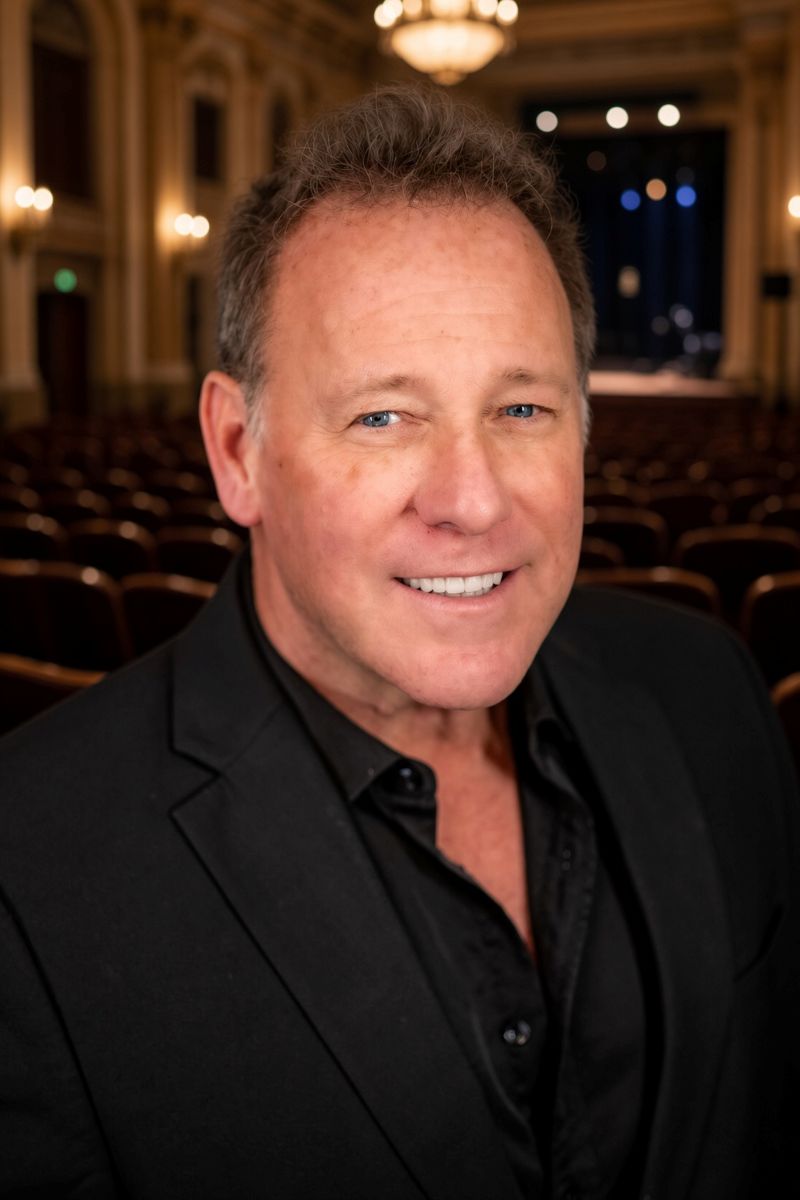
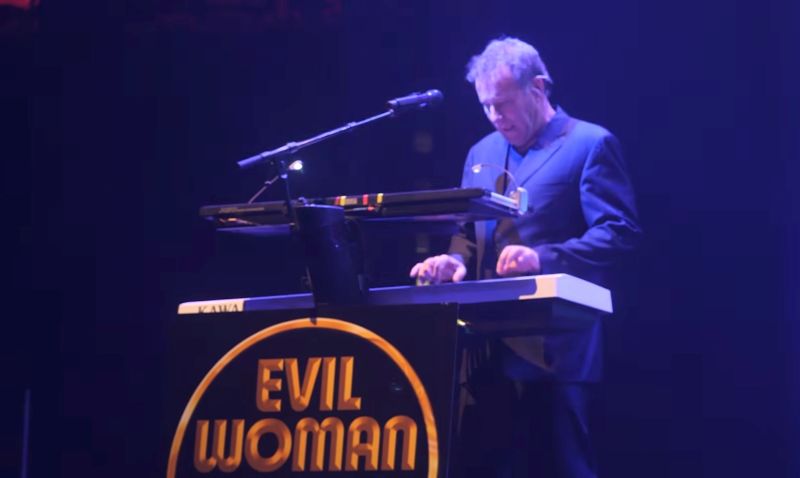
Nigel Holland is a founding member, musical director, and keyboardist of Evil Woman – The American ELO, a tribute band dedicated to the music of The Electric Light Orchestra. Holland has just released a live album on David Chatfield’s Harmony Records label from a 2023 show in Connecticut at the Mohegan Sun Arena.
Evil Woman is not just a tribute band or a cover band act doing homage to the songs and recordings of Jeff Lynne’s Electric Light Orchestra.
Besides the core musicians who join Holland on stage, Evil Woman is often backed in a collaboration with a full symphony orchestra at performance arts centers and Fine Arts venues across the United States. In January 2027, they’ll be in Canada.
Nigel Holland is a veteran musician with over 40 years of experience writing, producing, and recording He studied at the Crane School of Music in Potsdam, NY, and has performed and produced “live” shows worldwide.
Evil Woman’s repertoire is drawn from ELO, known for hits like Can’t Get It Out of My Head, Strange Magic, and Evil Woman.
The band blends ELO’s signature mix of disco beats, space-age imagery, orchestral arrangements, and Beatles‑influenced harmonies.
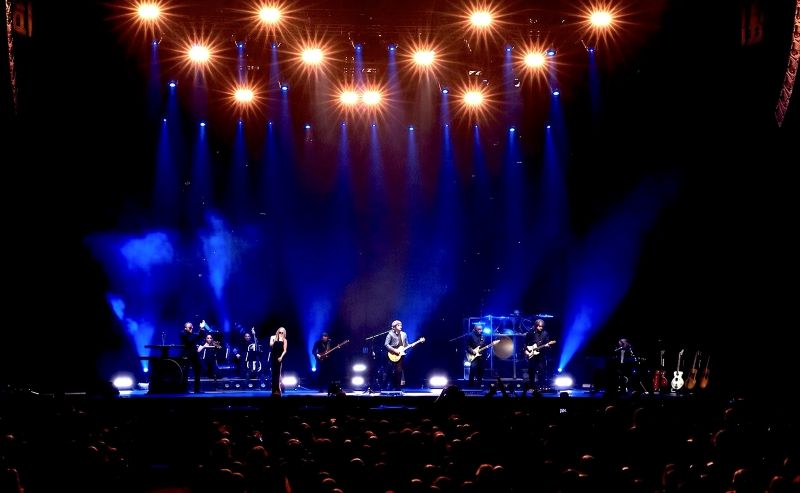
The name “Evil Woman” comes from ELO’s 1976 hit, and Holland has explained in interviews that it holds personal and artistic significance for him. As a founding member and musical director, Holland handles keyboards, vocals, and overall musical direction.
In 1976, I worked as a publicist for the Electric Light Orchestra when they were on the United Artists record label and saw the original group a dozen times. I was always drawn to their songs blending rock ‘n’ roll and classical music. And now I get to hear these popular tunes once again, under the direction of Nigel Holland.
In November 2026, I conducted an email interview with Holland, and also talked to David Chatfield about his recent addition to the growing roster of Harmony Records.
1. Nigel, how did you first discover the records of Electric Light Orchestra?
I still remember my friend Eugene playing “Livin’ Thing” for me when I was in seventh grade. I was immediately hooked. Not long after, I bought A New World Record, and that album completely won me over. Like so many ELO fans, I was drawn in by the melodies first, but the deeper I listened, the more I discovered. It was the beginning of a lifelong appreciation for Jeff Lynne’s music and the incredible world he created.
2. Did you realize very early that Jeff Lynne had a unique songwriting and compositional style?
Not at first. As a teenager, I simply loved the music. To my ears, it felt like an extension of the Beatles tradition, which was certainly not a bad thing. It wasn’t until much later, when I began studying and analyzing the music more closely around 2015, that I truly appreciated how unique Jeff’s writing is.
What makes his work so fascinating is that the songs are often built on relatively simple foundations, yet they sound remarkably sophisticated. He achieves that through inventive harmonies, orchestral textures, unexpected rhythmic twists, and countless little surprises along the way. “Don’t Bring Me Down,” for example, is essentially built around a straightforward I-IV-V progression, yet the vocal arrangements become increasingly elaborate as the song develops. Jeff might throw in an unexpected two-beat measure where you least expect it, and somehow it feels completely natural. That ability to make simplicity sound intricate is one of his greatest gifts as a songwriter and producer.
3. Were you in any previous bands that covered the music of ELO?
No. Most of my early bands focused on original material, along with a healthy dose of pop and bubblegum music. ELO wasn’t really part of my performing repertoire back then. My connection to their music was more as a fan than as a performer.
4. Can you discuss your own background as a keyboardist and musician that steered you into the world of orchestra-driven rock and roll? Did it emerge from your school studies?
My roots are really in rock and roll, pop, and blues piano. Players like Paul McCartney, Billy Joel, and Billy Preston probably influenced me more than jazz fusion or classical musicians. Ironically, I didn’t set out to specialize in orchestral rock at all.
What prepared me for it was my background in music theory and composition. Over the years I’ve written and arranged music in just about every genre imaginable. When the ELO project came along, it demanded a much deeper understanding of orchestration, and thankfully I had the educational foundation to meet that challenge. Rather than approaching the music as a keyboard player, I learned to think like an arranger and composer, serving whatever role the music required.
5. Why did you form Evil Woman and take me through the steps of the genesis of this current band?
In 1997, I founded The Right On Band, a ’70s show band specializing in disco, Motown, and funk. The group has been incredibly successful, performing for millions of people around the world and becoming the only band to perform for four sitting U.S. Presidents.
After nearly two decades, I found myself looking for a new creative challenge. The original idea behind Evil Woman was surprisingly modest. Kevin Fafard and I wanted to put together a local bar band that would play for fun during gaps in The Right On Band’s schedule. We each made a list of songs we thought would be good candidates, and to our surprise, four or five ELO songs appeared on both lists.
As rehearsals progressed, another realization hit us: Kevin not only sounded remarkably like Jeff Lynne, he bore an uncanny resemblance to him as well. The more we played the material, the more obvious it became that this couldn’t remain a simple five-piece bar band. The music deserved a larger vision.
I contacted Louis Clark and even offered to purchase his original string arrangements. Despite offering what I thought was a very generous sum, he declined. So I decided to take the long road. Drawing on my composition training from the Crane School of Music at SUNY Potsdam, I spent the next six months painstakingly transcribing orchestral parts by ear. In many ways, that’s where the real journey began.
6. What do an orchestra, strings and horns bring to this music on stage?
People often describe the orchestra as the icing on the cake, but I think it’s actually more integral than that. It’s the ingredient that transforms the music from great rock songs into the unmistakable sound of ELO.
The strings, horns, and layered orchestration create a sense of scale and drama that can’t be duplicated any other way. They add color, emotion, excitement, and movement. To borrow Paul Buckmaster’s phrase, they really do make the songs roar.
7. You are a keyboardist interpreting the work of a singer-songwriter and guitarist. How does that affect your approach?
Our philosophy has always been simple: honor the original recordings as faithfully as possible. We pay attention to every detail, from the guitars and amplifiers to the keyboard sounds and vocal harmonies.
Being a keyboard player doesn’t lead me to reinvent Jeff’s music. In fact, it probably makes me even more protective of the arrangements because I understand how carefully every part was constructed. That’s also why we insist on using live strings. You simply cannot recreate the depth, warmth, and energy of an actual string section with keyboard patches. The musicians on those original records were an essential part of the sound, and we believe they deserve to be represented authentically on stage.
8. Can we discuss the newly issued live album? How did it all come together?
The album actually evolved very naturally. We record virtually every performance as a live multitrack recording, primarily to generate promotional material and to document how the show continues to evolve.
Over the course of a year, we reviewed countless performances and selected the strongest version of each song. We then assembled those performances into what became the live album. To capture the atmosphere of the concerts, we incorporated audience microphones and ambient room recordings, allowing listeners to experience not only the music but also the energy of the crowd. Many of the tracks originated from our April 2023 performance at the Mohegan Sun Arena.
9. How did you select the repertoire and sequence on the live album?
The process was actually less scientific than people might imagine. Rather than focusing on chart positions, radio success, or fan polling, I simply listened to all of the available recordings and chose the performances that sounded the strongest.
Once those selections were made, I sequenced the album the same way I would as a fan sitting down to listen. My primary consideration was flow, energy, and sonic impact. I wanted the record to feel like a cohesive listening experience rather than a collection of individual tracks.
10. Does the repertoire become larger and establish a stronger connection with audiences over time?
Absolutely. Audiences certainly come to hear the songs they know and love, but we’ve found they also appreciate understanding the stories behind them. Throughout the show, we identify the albums the songs came from, discuss when they were released, and provide historical context.
Many of our performances take place in performing arts centers, where audiences appreciate that educational component. At the same time, we don’t present the material like a lecture. We use humor, audience participation, and a lot of playful interaction. The goal is to create an experience rather than simply perform a series of songs. By the end of the evening, people often feel they’ve been entertained, educated, and personally involved in the show.
11. Why does this venture keep growing?
I believe it comes down to authenticity and attention to detail.
Many tribute acts focus primarily on the song titles, but we strive to understand what made the original recordings special in the first place. We pay attention to the correct arrangements, harmonies, instrumentation, sounds, tones, and performance nuances. We also invest heavily in the production itself, from the lighting and video content to the overall concert experience.
Most importantly, everything we do comes from a genuine respect for Jeff Lynne and ELO. Audiences can tell when performers truly care about the material. They can also tell when corners are being cut. We never wanted this to be an imitation; we wanted it to be a celebration of the music. I think that sincerity is one of the reasons audiences continue to return and why the project continues to grow.
12. Talk to me about Stephen O’Leary.
Stephen O’Leary and I go all the way back to our days together at SUNY Potsdam, where we were fraternity brothers in The Order of Prometheus. He’s one of the most talented musicians I’ve ever worked with and possesses an extraordinary ear.
The task of transcribing ELO’s orchestral parts was monumental, and Stephen handled the majority of the heavy lifting. My role was often more editorial. I would review the charts, make suggestions, and occasionally catch a detail here or there. But the truth is that Steve’s accuracy and musicianship were remarkable. The success of this project owes a great deal to his work.
13. Talk to me about Kevin Fafard.
Kevin wears many hats. He was our lead vocalist, guitarist, and, for many audience members, the embodiment of Jeff Lynne on stage. He’s also my oldest son, which makes this project especially meaningful to me.
From the very beginning in 2014, Kevin played a major role in shaping the direction of the band. He helped select the early repertoire, contributed creative ideas for the stage production, and was instrumental in establishing the character of the show.
Since getting married, his availability for extended touring has naturally become more limited, but we’re fortunate to have another outstanding performer, Bennett Walker Wales, sharing the role. Having two exceptional “Jeff Lynnes” allows us to maintain the demanding schedule while preserving the quality audiences expect.
14. Talk to me about John Terrell and mixing the album.
John Terrell is one of those rare people who combines technical expertise, musical intuition, and incredible patience. That’s fortunate because I can be obsessive in the studio. I’ll spend days refining details that most listeners might never consciously notice.
John was an invaluable partner throughout the mixing process. He constantly offered ideas and perspectives that improved the final product. He has terrific ears, broad musical knowledge, and a remarkable ability to translate artistic goals into practical results.
Mixing a live album is very different from mixing sound for a concert hall. In a live venue, the focus is on clarity, impact, and adapting to the acoustics of the room. In the studio, you’re creating a listening experience that has to hold up under a microscope. Every sound becomes magnified. The challenge is preserving the excitement of a live performance while maintaining the polish listeners expect from a commercial release.
15. Tell me about the studios and Fred Guarino.
Soul Haven Studios in Virginia Beach was where the multitrack recordings were assembled and mixed. That’s where John Terrell and I spent countless hours shaping the performances into a cohesive album.
Fred Guarino of Tiki Recording in Glen Cove, New York, handled the recording sessions too, and mastering, but his influence on my musical life extends far beyond this project.
We’ve worked together since the early 1980s. In many ways, he’s been one of my most important mentors.
Over the years, Fred taught me lessons that don’t appear in textbooks: how to capture the character of a horn section, how to properly record strings, how to use multiple reverbs to create depth and dimension, and how subtle engineering decisions can completely transform a recording. His ears are exceptional, and his knowledge is immense. Looking back, I can honestly say that much of what I know about recording and production can be traced back to conversations with Fred. He has played a significant role in whatever success I’ve enjoyed over the years.”
After communicating with Nigel Holland, who explained his vision of Evil Woman, I emailed David Chatfield about his recent signee and asked how he discovered Nigel.
“I came across Nigel and his concert footage online. After I listened to the podcast interview and watched the videos, what grabbed me was how seriously Nigel took the music. He wasn’t just playing ELO songs. He was music-directing a full rock band with a real string section, and he arranged the strings himself with Stephen O’Lear. You could hear the respect for Jeff Lynne’s writing in every part.”
David and I also discussed the ever-growing classic rock audience that are now patrons in concert hall settings.
“People who grew up hearing these songs on the radio and in movie soundtracks want to hear that rock/orchestral sound again, but they also want to feel something new. Putting the songs on a stage with live violins and an orchestra gives them room to breathe, and the crowd gets to hear details they never noticed on the radio and maybe could only hear in the theaters on the movie soundtracks.”
Chatfield also explained why he signed Holland to his record label.
“Harmony has always been about authentic real music, great musicianship, and emotional performances, whatever the genre, and Nigel and the Evil Woman band brought a live, orchestral rock record that nobody else on the label was doing. I had Strangelove – The Depeche Mode Experience, and Julian Shah-Tayler and his various Bowie experiences.”
Chatfield also had a technical role in preparing Holland’s live album for commercial release.
“Nigel mixed the album with John Terrell at Soul Haven Studios in Virginia Beach, and Fred Guarino mastered it at Tiki Recording Studios a few years ago. Although they’re brilliant recordings, as with all new releases, the changes in mixing and mastering are vast.
“My part was to remaster and do some minimal recording, and, will be remixing the album for Dolby 5.1 and Dolby Atmos. I am experimenting with various surround sound formats to see which one works best with the recordings. I want the listener to experience the raw energy and boundlessness of sitting in the audience in a large hall.”
Please visit the websites Nigelhollandentertainment and theamericanelo.com. Evil Woman’s January-February live dates at casinos and Fine Arts Centers are listed.